Showing posts with label history. Show all posts

Wednesday, February 21, 2018

KERRY JAMES MARSHALL + VISUAL COMPARISONS


Leonardo da Vinci, The Last Supper
Velasquez, Las Meninas


Winslow Homer


Monday, January 15, 2018

DEGENERATE ART SHOW


Degenerate art is the translation of the German "entartete Kunst", a term adopted by the Nazi regime in Germany to denounce virtually all modern art.Degenerate Art was also the title of an exhibition, mounted by the Nazis in Munich in 1937, consisting of modernist artworks chaotically hung and accompanied by text labels deriding the art. Designed to inflame public opinion against modernism. The Entartete Kunst exhibit, featuring over 650 paintings, sculptures, prints, and books from the collections of thirty two German museums, premiered in Munich on July 19, 1937. Among them works of Emil Nolde, Max Beckmann, Wassily Kandinski, Otto Dix, Ernst Ludwig Kirchner, Ernst Barlach and other German avant-garde artists. The footage was shot by the American cinematographer Julien Bryan.

Thursday, January 11, 2018

1400, a poem by Albert Goldbarth

1400

Saps, and the anal grease of an otter, and pig's blood,
and the crushed-up bulbous bodies of those insects
that they'd find so thickly gathered on barnyard excrement
it makes a pulsing rind, and oven soot, and the oil
that forms in a flask of urine and rotting horseflesh,
and the white of an egg, and charcoal, and the secret
watery substance in an egg, and spit-in-charcoal
in a sluggish runnel of gray they mixed
with the harvested scum of a bloated tomato,
and steamed plant marrows beaten to a paste,
and orange clay, and auburn clay, and clay bespangled
with the liquid pearl of fish scales stirred in milt,
and suet, and glue boiled out of a hoof,
and ash, and grape-like clusters of fat grabbed
out of a chicken carcass and dried in the sun
until it became inert and yet still pliable, and lime,
and the pulp of the cherry, and the pulp of the cherry
immersed in egg, and coral in a powder,
and silver flake, and fig, and pollen, and dust, and beeswax,
and an iridescence scraped with infinite care
from the wings of hundreds of tiny flying things,
and salted iridescence, and human milk, and ores,
and gall, and stains expressed from teas, and gobs of squeeze-off
from the nettings of cheese, and rouge, and kohl,
and luster, and oyster, and lees: and so from these
they made their paints: and then
their Gods and their saints.

–Albert Goldbarth (born 1948)

•  •  •

Sunday, January 7, 2018

A WORKING DEFINITION OF PAINTING

In a joint-talk given at MoMA with the painter Chuck Close, Carroll Dunham provided the following definition of painting, managing to summarize a fairly sweeping range of issues related to the discipline in the space of two consecutive compound sentences:


"Painting is a relatively recent manifestation of humanity’s ancient effort to understand and exploit pictorial space generally understood to consist of sheets of colored paste spread manually across primarily rectilinear planar supports embodying illusionistic or quasi-narrative properties, although each of the previous characteristics have been challenged and contradicted to great theoretical and expressive effect without the loss of basic categorical integrity–testimony to painting's nature as both bounded and infinite and its ability to absorb apparently conflicting attitudes on the part of its creators.

Painting operates at the nexus of intersubjective experience and consensual reality, relying on both for its subject matter while remaining stubbornly self-referential, and its content extends into the areas we call psychological, social, material (in both the philosophical and economic senses of the word), and—for the lack of a better term—spiritual, giving it unusual utility as a tool for studying the evolution of the self, of socio-cultural systems, and of the complex reciprocities between the two, strikingly manifest within the apparent disconnect within paintings dual nature as a repository of capital and a facilitator of profound contemplation, a perfect storm of the crass, the sacred and the intimately personal." [14][15]

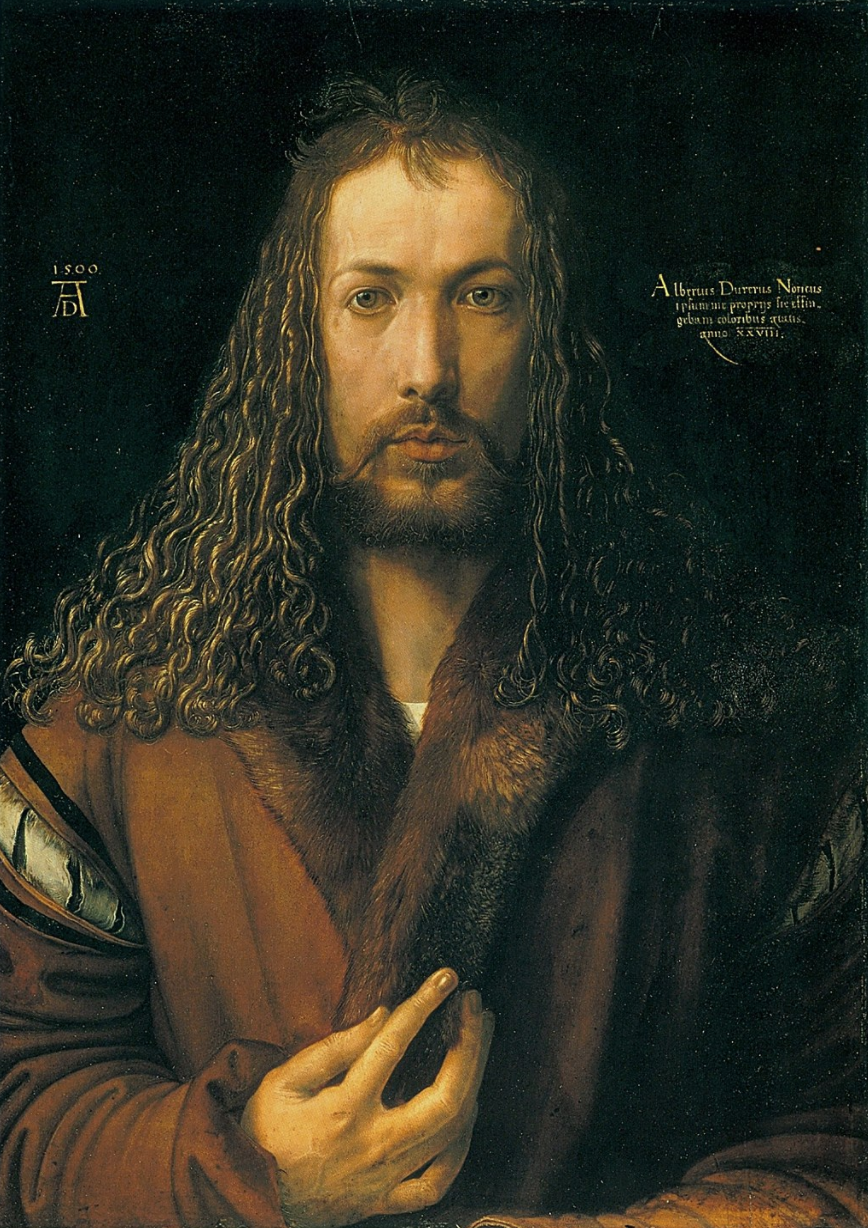
AN INSANELY ESSENTIALIST SELECTION OF PAINTING FROM CAVES TO CEZANNE

17,000 B.C.E. – 1906 C.E.


Lascaux, Horse


Lascaux, Bulls and Horses


Cueva de las Manos in Argentina, c.7300 BC


Hellenistic Greek funerary wall painting, 3rd century BC


Mural of soldiers, Ancient Macedonia, 4th century BC


Byzantine icon, 6th century


Giottino, 1365


Hieronymus Bosch, c. 1480–1505


Sandro Botticelli, 1483–1485


Leonardo da Vinci, 1503–1506


Michelangelo, c. 1511


Pontormo, 1526–1528


Caravaggio, 1595–1597


Artemisia Gentileschi, 1614–1620


Frans Hals, 1624


Diego Velázquez, 1656–1657


Canaletto, 1723


Jean-Honoré Fragonard, c. 1767–1768


Georges Seurat 1884–1886


Paul Gauguin 1897–1898